
Looking for a fun and creative way to keep the kids entertained? DIY playdough might just be the answer! It’s not only a fantastic activity for little hands but also a great way to unleash their imagination. Plus, who wouldn’t want to whip up a batch of squishy, colorful dough with just a few pantry staples?
What Is DIY Playdough?
DIY playdough refers to homemade modeling clay created from simple kitchen ingredients. This craft typically includes flour, salt, water, and cream of tartar as primary components. Homemade playdough promotes creativity, allowing children to mold and shape various objects.
Parents choose DIY playdough for its ease of preparation and cost-effectiveness. Many common recipes yield several batches, making it economical for families. Ingredients, including food coloring and natural scents like vanilla or peppermint, can personalize the dough.
DIY playdough also encourages sensory play, stimulating tactile exploration through its unique textures. Children experience a soft, pliable medium that can be manipulated in countless ways. As they play, fine motor skills and hand-eye coordination develop naturally.
Safety adds to the appeal of DIY playdough. Parents appreciate that it uses non-toxic ingredients, making it safe for children. Although the dough remains edible, it’s not a food item and should not be consumed in large quantities.
Benefits extend beyond just fun. Engaging in this activity fosters bonding time between parents and children. It serves as an educational tool, introducing concepts like measurement and color mixing. Families can also customize playdough’s theme for holidays or special occasions, enhancing the creativity involved.
Creating DIY playdough becomes an enjoyable tradition that nurtures children’s imaginative play and enhances their development through hands-on activities.
Benefits of DIY Playdough
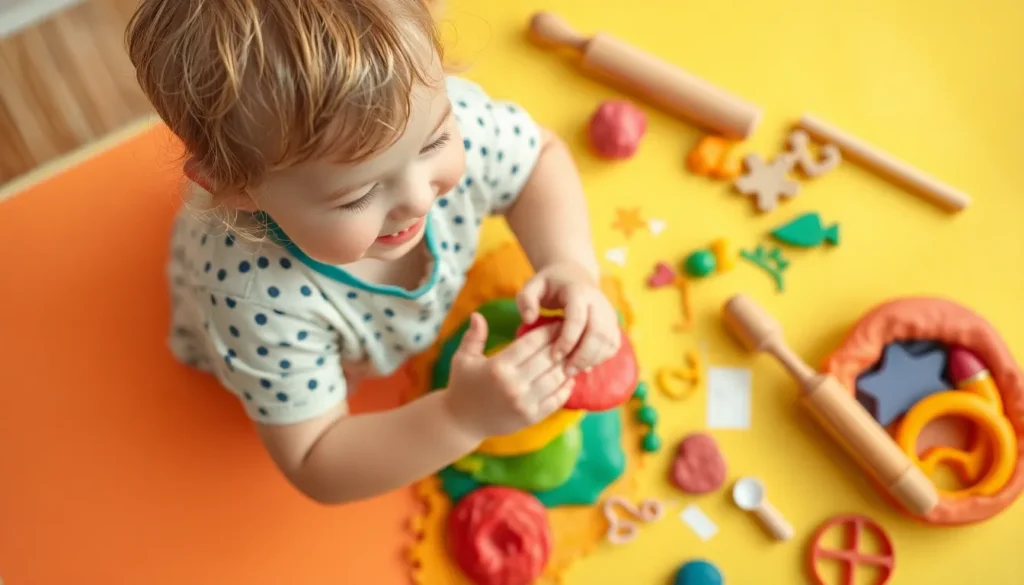
DIY playdough offers numerous advantages for children’s growth and learning. It promotes creativity while also serving as an educational tool.
Educational Advantages
Learning through playdough enhances various skills. Children practice measurement and mixing when they create different dough colors. Vocabulary enrichment occurs as they describe their creations and share ideas. Problem-solving skills develop as they figure out how to shape and mold their playdough. Engaging in this activity helps reinforce basic math concepts, such as counting and comparing sizes. Parents can further enrich the experience by integrating lessons about texture and colors. Overall, DIY playdough serves as a hands-on method to help children grasp foundational concepts.
Sensory Development
DIY playdough significantly boosts sensory development. Children engage with varied textures, stimulating their tactile senses. The act of kneading and rolling playdough strengthens fine motor skills and enhances coordination. Smells from natural ingredients contribute to a multi-sensory experience. The vibrant colors of the dough provide visual stimulation, capturing children’s attention. Encouraging exploration through manipulation supports cognitive development. This sensory-rich activity enhances creativity while allowing for self-expression. Each interaction with playdough builds confidence and encourages curiosity.
How to Make DIY Playdough
Making DIY playdough is straightforward and requires simple ingredients found in most pantries. This process allows for a creative outlet while promoting learning.
Essential Ingredients
Using basic components creates the foundation for playdough. Ingredients include:
- Flour: One cup serves as the main ingredient for structure.
- Salt: One-fourth cup adds flavor and acts as a preservative.
- Water: One cup provides moisture for the mixture.
- Cream of Tartar: Two teaspoons contribute to that stretchy texture.
- Oil: Two tablespoons enhance the dough’s smoothness.
- Food coloring: Optional for personalized colors.
These ingredients ensure a safe and flexible dough ideal for young hands and imaginative play.
Step-by-Step Instructions
Following these steps yields the perfect DIY playdough:
- Combine flour, salt, and cream of tartar in a bowl.
- Mix water, oil, and food coloring in a separate container.
- Heat the combined wet ingredients in a saucepan over medium heat.
- Stir continuously until the dough thickens and starts to pull away from the pan.
- Transfer the dough to a floured surface to cool slightly.
- Knead the dough for a few minutes until it reaches a pliable consistency.
After these steps, children can enjoy using their homemade playdough for hours of creative fun.
Tips for Customizing Your DIY Playdough
Customizing DIY playdough enhances creativity and sensory experiences. Adjusting colors and textures provides endless possibilities for imaginative play.
Adding Colors and Scents
Food coloring transforms plain playdough into vibrant creations. Choosing gel or liquid color adds depth, allowing children to mix colors for unique results. Natural extracts like vanilla or almond create delightful scents, enriching the sensory experience. Lavender oil offers a calming aroma, while citrus scents energize the play. Encourage kids to experiment with different combinations, fostering their creativity and decision-making skills. Observing how colors blend inspires curiosity about art and science.
Incorporating Textures
Experimenting with textures elevates playdough fun. Adding ingredients like sand, rice, or oats introduces different feels, stimulating tactile exploration. Incorporating herbs or spices also infuses fragrant textures, making the dough more inviting. For an engaging sensory experience, consider using textured utensils, molds, or tools during play. Each texture presents new opportunities for exploration, enhancing fine motor skills while keeping the activity engaging. Building on these tactile experiences encourages children to describe what they feel, integrating language development into play.
Storing and Using DIY Playdough
Proper storage ensures DIY playdough remains fresh and usable. Storing it in an airtight container keeps moisture locked in and prevents drying. A plastic zipper bag can also do the trick. Playdough can last up to 2 to 3 months when stored this way. For extended freshness, place it in the refrigerator, particularly in warmer climates or during summer months. Before playtime, simply let it sit at room temperature for a few minutes to soften.
Best Storage Practices
Utilizing airtight containers prevents moisture escape. Keeping playdough in a cool, dry place extends its shelf life. Adding a damp cloth inside the container can keep the dough moist without making it soggy. Checking for signs of drying or hardening helps maintain quality. If the playdough starts to dry out, kneading in a few drops of water can restore its texture. Always label containers with the date made to track freshness.
Creative Play Ideas
Encouraging imaginative play enriches the DIY playdough experience. Creating themed sets for holidays, such as Halloween pumpkins or Christmas ornaments, sparks creativity. Incorporating common household items, like cookie cutters or rolling pins, adds variety to playtime. Building models from favorite animals or vehicles promotes exploration. Engaging in group activities allows for social interaction and collaboration among children. Offering challenges, such as shaping the tallest tower or crafting unique creatures, inspires problem-solving skills.
DIY playdough is more than just a fun activity; it’s a gateway to creativity and learning for children. By engaging in this hands-on experience, kids develop essential skills while enjoying quality time with their parents. The versatility of DIY playdough allows for endless customization, making it suitable for any occasion or theme.
Proper storage ensures that the playdough remains fresh, ready for countless hours of imaginative play. This simple yet effective craft not only entertains but also nurtures a child’s development in various ways. Embracing DIY playdough means embracing a world of creativity, learning, and bonding that families can cherish together.